199 N US Hwy 183, Leander, TX Mon-Fri: 7:00 AM - 9:00 PM · Sat-Sun: 7:00 AM - 6:00 PM
6+ Years in Leander · Licensed & Insured

Leander, TX Roofing Contractor for Hail Repair, Replacement & Metal Roofs

Leander roofs have a tough job. Spring supercells pick up strength as they cross the Balcones Escarpment and drop hail right on Williamson County subdivisions. Then summer brings weeks of 100°F days that bake shingles from above while hot attics cook them from below. Most homes here went up after 2000, so a lot of the builder-grade roofs from that boom have now taken several hailstorms and too many Texas summers. Leander Roof Masters finds the damage you can't see from the driveway, explains it in plain language, and repairs or replaces your roof so it can handle what Central Texas throws at it.

We're a Leander-based crew that has worked the northwest Austin suburbs since 2020. We know the multi-valley hip roofs in Leander's production-home neighborhoods, the 1980s and '90s rooftops in Cedar Park and Brushy Creek, and the steep, tree-shaded lake homes in Jonestown and Volente. Every inspection comes with close-up photos and a written estimate. After a storm, we'll help you understand your insurance options. And when the job's done, we run a magnetic sweep over the whole yard and driveway so no nails get left behind.

  • Serving Leander and NW Austin suburbs since 2020
  • Bonded and insured
  • Close-up photo documentation with every inspection

Leander homeowners call us because we show our work. Every inspection comes with close-up photos and a written estimate, and we explain insurance options honestly instead of making promises Texas law doesn't allow. At the end of every job, we leave the yard and driveway clear with a full magnetic nail sweep.

Request Your Free Estimate

No obligation. Fast, honest quotes.

Your information is never shared.

Online Estimates
Onsite Service
Licensed & Insured
Customer Rated
Local Expertise

Why Leander Homes Need a Roofer Who Knows Central Texas

Leander sits where the Hill Country meets the Blackland Prairie, and that spot puts roofs under several kinds of stress at once. Hail, extreme heat, flash-flood downpours, the occasional ice storm, and a housing stock that's mostly 25 years old or younger all affect what your roof needs and when.

Hail Alley Weather on the Balcones Escarpment

Central Texas is one of the most active hail regions in the country. Peak season runs roughly March through June, with a smaller peak in the fall. Supercells that form along the dryline often get stronger as they cross the escarpment, which is why Leander, Cedar Park, Liberty Hill and Georgetown get hit so often. Hail 1 inch and up bruises shingles and dents vents and flashing. July and August highs sit in the mid-to-upper 90s, and summers like 2011 and 2023 brought long runs of 100°F+ days. That heat speeds up oxidation and granule loss. About 35 inches of rain a year tends to come in Flash Flood Alley bursts, and Winter Storm Uri in 2021 and the February 2023 ice storm proved that ice can drop live-oak limbs straight through a roof deck.

A Young, Fast-Built Housing Stock

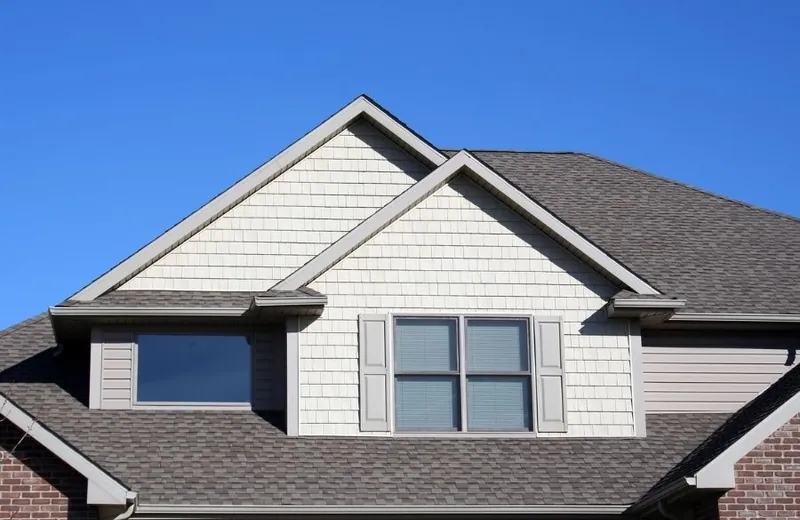
Leander grew from fewer than 10,000 residents in 2000 to about 59,000 by the 2020 Census, so most homes here are production builds from the last 25 years. Lennar, Pulte, Taylor Morrison, David Weekley, Perry and other builders put up complex hip-and-gable roofs with lots of valleys and stone 'Hill Country' facades. Early-2000s homes often still have 3-tab or entry-level architectural shingles, box vents and cheap pipe boots. Many of those roofs have reached the end of their real-world life. Cedar Park, Brushy Creek and Round Rock homes are mostly from the 1980s through the 2000s. Lake Travis cabins in Lago Vista and Jonestown can date to the 1970s and sometimes have several layers of shingles over tired decking.

Permits, HOAs and Texas Insurance Rules

Leander, Cedar Park, Round Rock, Georgetown and most nearby cities use IRC-based codes with local amendments, and many of them require a permit or registration for a reroof. We check current requirements with each building office before work starts. Most subdivisions have HOA architectural committees that approve colors and materials, though Texas Property Code §202.011 generally keeps them from banning impact-resistant or energy-efficient shingles. Georgetown's historic overlays require a Certificate of Appropriateness. Texas law also bars contractors from waiving deductibles or acting as public adjusters, so be careful with any roofer who offers to do either.

Why the Numbers Matter to Your Wallet

Many local policies carry wind/hail deductibles of 1–2% of dwelling coverage. On a $450,000 home, that's $4,500 to $9,000 out of pocket before insurance pays anything. Older roofs are often covered only at actual cash value, which lowers payouts even more. On the other hand, Texas insurers have to offer premium discounts for UL 2218 Class 4 impact-resistant roofs. That's why the material you choose for your next roof can affect your insurance costs for years.

Know The Signs

Common Roofing Problems We See in Leander and Nearby Communities

Most of the roof failures we run into around Leander come from the same handful of causes: hail, heat, wind, tricky roof shapes and builder shortcuts. Here's what each problem looks like, why it's so common here, and how serious it tends to be. That way you'll know when to keep an eye on something and when to call right away.

Hidden Hail Bruising and Granule Loss

Serious

Hail hits soften the shingle mat and knock off the protective granules, even when the shingle looks fine from the ground. Larger stones can fracture the fiberglass mat. That exposes the asphalt to UV and leads to leaks months after the storm.

Why it happens here

Supercells tend to strengthen as they cross the Balcones Escarpment, so neighborhoods from Liberty Hill to Georgetown get repeated hail between March and June. A lot of Leander roofs have taken two or three events since they were installed. Because the bruising can't be seen from the yard, homeowners often miss their insurer's filing window. The damage keeps getting worse in the July heat, when exposed asphalt oxidizes fast.

Signs to watch for
  • Granules piling up at downspout outlets
  • Dark, shiny spots on shingles where granules are missing
  • Dents in gutters, box vents or AC fins
  • Dings on metal flashing or chimney caps
  • Neighbors getting roof inspections or replacements
  • Spatter marks on fences, decks or patio furniture
Local patterns

We see this most in Crystal Falls, Travisso, Block House Creek and the newer Liberty Hill and north Georgetown subdivisions after spring storms. Builder-grade architectural shingles on 2005–2015 homes usually show the worst bruising, especially on west- and south-facing slopes.

Our fix

Close-up photo inspection with marked impact counts, then targeted repair or full replacement. Class 4 impact-resistant shingles are an option that may qualify for an insurance premium discount.

Active Roof Leaks After Flash-Flood Downpours

Emergency

Water gets past the roof system and into the decking, insulation or living space, usually at valleys, flashing, pipe boots or skylights. During intense rain, a small weak spot can let in gallons in a matter of hours.

Why it happens here

Leander is part of Flash Flood Alley, where several inches of rain can fall in a few hours. Those bursts overwhelm valleys and gutters on the many-valley hip roofs typical of production homes. Pipe-boot rubber cracks quickly under year-round UV at 30°N latitude, and a lot of skylights were flashed with sealant rather than proper metal. Once water starts getting in, it soaks decking and drywall fast.

Signs to watch for
  • Brown stains spreading on ceilings
  • Dripping around light fixtures or vents
  • Musty smell in the attic
  • Damp or matted insulation
  • Bubbling paint near the tops of walls
  • Water marks around skylight frames
Local patterns

Leaks show up most often on Cedar Park and Brushy Creek homes with original pipe boots, and on Leander homes with skylights over kitchens. Lake-area cabins in Jonestown and Volente with old decking also take on water quickly.

Our fix

Fast emergency tarping to stop the water, leak detection to trace the real entry point, then permanent repair of the boots, valley metal, flashing or decking.

Wind-Lifted Shingles and Peeled Ridge Caps

Moderate

Straight-line winds break the adhesive seal strips, lift shingle tabs and peel back ridge caps or starter courses. Once a tab has been lifted, it rarely reseals. Next time, the wind can take the whole shingle off.

Why it happens here

Spring and early-summer thunderstorms across Williamson County routinely produce straight-line gusts, and brief tornadoes happen now and then. Seal strips that have already been weakened by 100°F heat let go more easily. Builder-grade installs often have high-nailed or under-nailed shingles and poorly fastened starter strips, which is exactly where wind gets in first.

Signs to watch for
  • Shingles or ridge caps in the yard
  • Creased or folded tabs
  • Visible lines where shingles have lifted
  • Exposed nail heads
  • Missing shingles along rakes and eaves
  • Flapping sounds during storms
Local patterns

Common on exposed ridgeline homes in west Leander and Lago Vista, along with open-prairie subdivisions east toward Round Rock and Pflugerville where nothing breaks the wind.

Our fix

Replace damaged shingles, hand-seal surrounding tabs, re-nail starter and ridge courses, and document everything with photos in case you file a claim.

Heat-Aged Builder-Grade Shingles

Moderate

Asphalt shingles dry out, curl, crack and shed granules as they oxidize. In Central Texas, a shingle with a 25- or 30-year label often wears out well before that, particularly the entry-level products used in subdivision construction.

Why it happens here

July and August highs in the upper 90s, many 100°F+ days, and roof-deck temperatures far above the air temperature all speed up oxidation. Many 2000s Leander homes were built with 3-tab or entry-level shingles over basic underlayment and too few soffit intakes. Those roofs are now at or past their real-world life, and their owners are often buying a roof for the first time.

Signs to watch for
  • Shingle edges cupping or clawing
  • Cracks across the shingle surface
  • Bald, smooth patches
  • Mismatched patches from earlier repairs
  • Brittle shingles that crack when lifted
  • Roof is 15 years old or more
Local patterns

Concentrated in 2000–2012 neighborhoods across Leander and Cedar Park and in older Brushy Creek and Jollyville sections. Neighborhoods that have been through more than one claim replacement often show mismatched shingle lines.

Our fix

Full replacement with upgraded architectural or Class 4 shingles, synthetic underlayment, new pipe boots, and a balanced ventilation system.

Missing Kick-Out and Faulty Roof-to-Wall Flashing

Serious

Kick-out flashing steers water away from the wall at the spot where a roof edge meets a sidewall. When it's missing or too short, water runs behind stone, brick or siding and rots the sheathing and framing without anyone noticing.

Why it happens here

Leander's 'Hill Country' facades put a lot of stone walls right up against roof planes, and many builders left out kick-outs or installed undersized ones. On the east side, expansive Blackland clay shrinks and swells under foundations. That can rack the framing and open gaps at step flashing and around chimneys, especially in Round Rock, Pflugerville and east Georgetown.

Signs to watch for
  • Streaks or staining on stone below a roof edge
  • Soft or bulging siding near rooflines
  • Interior stains on walls, not ceilings
  • Separated caulk at chimney or wall joints
  • Wood rot at the bottoms of fascia boards
  • Gaps between flashing and masonry
Local patterns

Most common on two-story production homes with stone-front gables in Leander and Liberty Hill, and on Round Rock homes where clay soil movement has shifted framing over the years.

Our fix

Remove shingles locally, install proper step and kick-out flashing, counter-flash into the masonry, and replace any rotted sheathing before the rot spreads.

Under-Ventilated, Overheated Attics

Minor

An attic without enough intake and exhaust airflow traps heat and moisture. Shingles end up cooking from below, AC equipment in the attic has to work harder, and electric bills climb.

Why it happens here

A lot of production homes were built with a few box vents and too few soffit intakes, and many have HVAC units and ductwork up in the attic. When it's 100°F outside, that attic can get far hotter. The extra heat shortens shingle life and can void manufacturer warranties that require balanced ventilation.

Signs to watch for
  • Upstairs rooms noticeably hotter
  • High summer electric bills
  • Rippled or wavy shingles
  • Attic that feels like an oven at midday
  • Painted-over or blocked soffit vents
  • Rust on nail tips inside the attic
Local patterns

We find this all over 2000s–2010s subdivisions in Leander, Cedar Park and Georgetown, particularly in two-story homes whose attics hold both an AC air handler and ductwork.

Our fix

Ventilation assessment and upgrade: continuous ridge vents, added soffit intakes, and options like radiant barriers or cool-roof shingles to cut attic heat.

Tree and Ice Storm Impact Damage

Emergency

Falling live-oak or cedar limbs punch through shingles and decking, crush gutters and break rafters. Constant branch rubbing also wears down shingles, and leaf and needle debris clogs valleys until water backs up.

Why it happens here

Hill Country neighborhoods are thick with Ashe juniper and live oak. Ice loading during Winter Storm Uri in February 2021 and the February 2023 ice storm brought down limbs across the region. A few roofs that were never built for freezing temperatures also got ice-dam leaks. Clogged gutters and valleys add wildfire ember risk in the wildland-urban interface.

Signs to watch for
  • Limbs resting on the roof
  • Visible holes or sagging deck sections
  • Bent or detached gutters
  • Debris piled in valleys
  • Scuffed shingles under overhanging branches
  • Leaks right after a freeze or ice event
Local patterns

Concentrated in Lago Vista, Jonestown, Volente, Hudson Bend and Lakeway, as well as older tree-lined streets in Cedar Park and Jollyville that have mature live-oak canopies.

Our fix

Emergency tarping, decking and rafter repair, gutter replacement, valley clean-out, and gutter guards to keep debris out after that.

What We Do

Roofing Services for Leander Homes and Businesses

We handle everything from a single cracked pipe boot to a full standing-seam metal roof. Our services are grouped below by the kind of problem they solve. Every job starts the same way: we inspect the roof, photograph what we find, and give you a written estimate so you can see exactly what's going on before you decide anything.

Specialty

Hail & Storm Damage Repair and Insurance Guidance (Roof Damage Repair, Roof Repair, Roof Shingle Repair, Roof Patching)

We find and fix hail bruising, wind-lifted shingles, dented vents and damaged flashing. Our documentation includes close-up photos and impact counts so you can make an informed decision about whether to file a claim.

Our approach

Slope-by-slope inspection with chalk-marked test squares, photo documentation, and a written scope. We'll explain deductibles, ACV coverage and policy terms in plain English. We don't waive deductibles or act as your adjuster, because Texas law prohibits both.

In Leander, TX

After spring supercells cross the escarpment, we're on roofs in Leander, Liberty Hill and Georgetown checking for damage you can't see from the ground. Catching it before the summer heat speeds up granule loss makes the repair or claim simpler.

Best for

Homeowners after a hailstorm, anyone whose neighbors are getting new roofs, and buyers or sellers who need a clear picture of a roof's condition.

Specialty

Roof Replacement & Asphalt Shingle Installation (Roof Installation, Architectural Shingles, 3-Tab Shingle Roofing, Winter Roof Replacement)

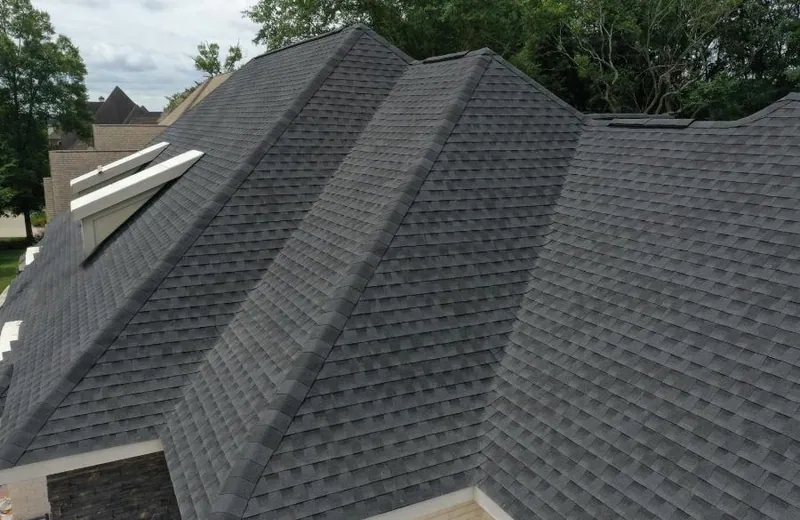
Full tear-off and replacement of aging or storm-damaged roofs with architectural, 3-tab, or Class 4 impact-resistant shingles. That includes new underlayment, drip edge, valley metal, pipe boots and ventilation.

Our approach

We tear down to the deck, replace any soft decking, and install synthetic underlayment, ice-and-water shield in valleys, proper starter courses, and correct nailing patterns. We handle HOA submittals and city permits where required.

In Leander, TX

Thousands of 2000s Leander and Cedar Park homes still have builder-grade shingles. Upgrading to Class 4 shingles can earn Texas insurance premium discounts, and §202.011 limits HOAs' ability to refuse them.

Best for

Roofs that are 15 years or older, multi-hail-event roofs, homes with mismatched patches, and owners who are tired of filing a claim every spring.

Metal Roofing (Metal Roof Installation, Standing Seam Metal Roof, Residential Metal Roofing, Steel Roofing, Corrugated Metal Roofing, Metal Roof Repair)

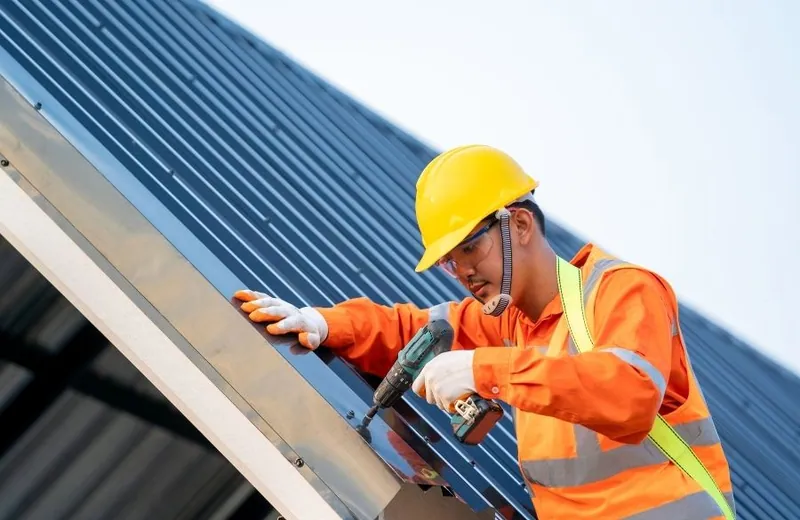
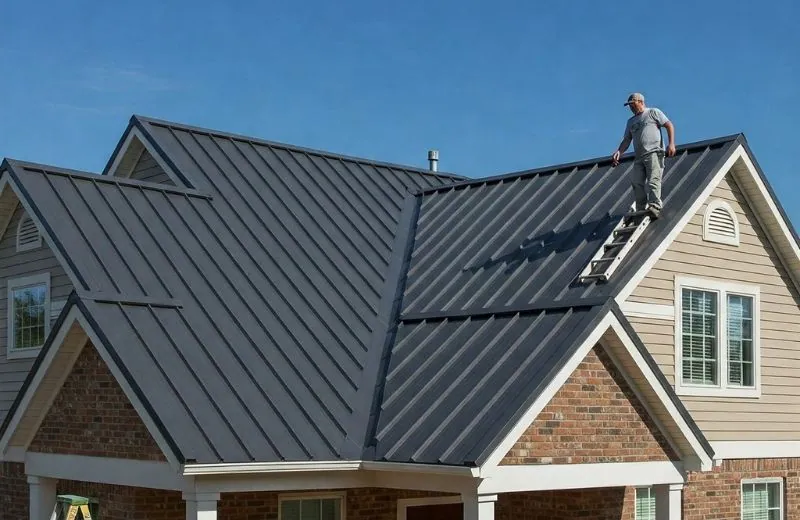
We install and repair standing-seam, steel and corrugated or R-panel metal roofs on homes, porches, barns and shops. That covers both full-roof systems and the metal porch accents that are popular on modern farmhouse builds.

Our approach

Concealed-fastener standing seam for homes and exposed-fastener panels for outbuildings, with proper underlayment and closures. Repairs include fastener replacement, re-sealing, and replacing panels dented by hail.

In Leander, TX

Metal holds up well against Leander heat and UV and offers Class A fire resistance for wildland-urban interface lots near Lake Travis. Rural Liberty Hill, Bertram and Weir properties rely on Galvalume panels for barns and shops.

Best for

Long-term homeowners, acreage properties, Hill Country contemporary homes, and anyone who wants a roof that reflects heat and resists wildfire embers.

Flashing & Leak Repair (Roof Leak Detection & Repair, Roof Flashing, Chimney Flashing Repair, Chimney Leak Repair, Skylight Leak Repair, Roof Drip Edge Flashing, Roof Flashing for Metal Roof, Steel Roof Flashing)

We trace leaks to their real source and rebuild the flashing at chimneys, skylights, stone walls, valleys, eaves and metal-roof transitions so the water stops for good. Fresh caulk alone doesn't do that.

Our approach

Attic inspection, water testing where needed, and removal of shingles around the problem area. We install step, kick-out, counter and drip-edge flashing in compatible metals, including custom-bent trim for steel and standing-seam roofs.

In Leander, TX

Stone 'Hill Country' facades without kick-outs and clay-shifted framing in Round Rock and Pflugerville cause many of the wall-line leaks we see. Skylights on Cedar Park homes from the '90s are another frequent culprit.

Best for

Recurring leaks, stains on walls rather than ceilings, chimney and skylight drips, and roofs where earlier caulk-only repairs didn't hold.

Emergency Roof Repair & Tarping (Emergency Roof Repair, Emergency Roof Tarping, Roof Tarp Installation)

When hail, wind or a falling limb opens up your roof, we tarp it to stop the water, document the damage, and then make permanent repairs once materials and scheduling allow.

Our approach

Heavy-duty tarps fastened over battens and run past the ridge so they hold up in wind, with photos taken before and after. Debris and limbs are cleared from the roof surface when it's safe to do so.

In Leander, TX

After a major hail event, demand can outpace local crews and material supply for weeks. A quick tarp keeps a Leander or Lago Vista home dry while permits, HOA approvals and claims work their way through.

Best for

Active leaks, punctured decking, missing sections of shingles, and tree-strike damage after storms or ice events.

Flat & Commercial Roofing (Commercial Roofing, Commercial Roof Repair, Flat Roof Repair, Flat Roof Replacement, TPO Roofing, EPDM Rubber Roofing)

Repair and replacement of low-slope and flat roofs on retail strips, offices and custom homes, using TPO, EPDM and other single-ply systems.

Our approach

Core cuts to check the existing layers, moisture surveys, seam welding for TPO, fully adhered or mechanically attached membranes, and careful detailing at curbs, drains and parapets.

In Leander, TX

Commercial strips along US-183, RM 2243, RM 1431 and Ronald Reagan Blvd see the same hail and flash-flood ponding as homes do. White TPO also reflects heat and cuts cooling loads during Leander summers.

Best for

Property managers, small business owners, and custom homes with low-slope sections that are ponding or leaking.

Restoration, Coatings & Maintenance (Roof Restoration, Roof Maintenance, Roof Coating Application, Roof Waterproofing, Roof Inspection)

Scheduled inspections, tune-ups and protective coatings that add years to a sound roof. We also do pre-listing and buyer inspections for real estate transactions.

Our approach

Photo-documented inspections, pipe-boot replacement, re-sealing of exposed fasteners, valley clean-outs, and silicone or acrylic coatings on suitable flat and metal roofs.

In Leander, TX

In Central Texas, a pipe boot can crack in a few summers. An annual check before hail season and again after the fall storms catches small failures before they turn into ceiling damage.

Best for

Roofs with plenty of life left, commercial owners trying to postpone replacement, and buyers or sellers who need a documented roof report.

Premium Materials (Tile Roofing, Slate Roof Installation, Cedar Shake Roofing, Copper Roofing)

Installation and repair of clay and concrete tile, slate, cedar shake and copper roofing and accents for upscale custom homes and historic properties.

Our approach

Material-specific fastening and underlayment, careful handling of brittle tile and slate, and soldered or locked copper detailing. Historic work is matched to the existing profile and color.

In Leander, TX

Tile is common in Lakeway and some Crystal Falls custom homes. Georgetown's historic overlay districts require a Certificate of Appropriateness before you change materials, and we can help you prepare that submittal.

Best for

Custom and luxury homes, historic Georgetown and Bertram properties, and homeowners who want distinctive materials that last.

Ventilation, Gutters & Edges (Roof Ventilation Installation, Soffit & Fascia Installation, Gutter Guard Installation)

We balance attic airflow, replace rotted soffit and fascia, and install gutter guards that keep oak leaves and cedar debris out of your drainage.

Our approach

Intake-to-exhaust calculations, continuous ridge vents, vented soffit panels, fascia replacement, and guards sized to handle Flash Flood Alley downpours.

In Leander, TX

Under-vented production-home attics drive up electric bills in Leander summers. In wooded Jonestown and Volente, guards cut down on clogs and on the ember-catching debris that matters in wildfire country.

Best for

Hot upstairs rooms, high energy bills, overflowing gutters, and rotted eaves.

Winter Storm & Ice Damage Services (Roof Leak Repair in Winter, Roof Ice Removal, Roof Snow Removal, Professional Ice Dam Removal, Ice Dam Leak Repair, Water Damage from Ice Dam, Roof Heat Cable/Tape Installation, Gutter Ice Removal)

Ice storms are rare here, but they do happen. When one hits, we safely remove ice buildup, repair ice-dam leaks and crushed gutters, and fix the decking and water damage left behind.

Our approach

Careful, non-destructive ice and snow removal, gutter ice clearing, leak repair once it's safe to work, and heat cable installation on problem eaves and valleys that are prone to refreezing.

In Leander, TX

Winter Storm Uri in 2021 and the February 2023 ice storm caught Central Texas roofs off guard. That meant falling limbs, ice-loaded gutters and ice-dam leaks on homes never designed for freezing temperatures.

Best for

Homes with shaded north-facing eaves, heavy tree cover, or a history of leaks during freezes.

Simple & Transparent

How Our Roofing Process Works

No pressure and no surprises. Here's what happens from your first call to the final nail sweep. We keep you in the loop with photos and written documents at every step.

Schedule Your Inspection

  • Tell us what you've noticed: leaks, storm dates, roof age
  • We set a time that works for you
  • Active leaks get a tarping visit first

After big spring hail events, call early. Demand across Leander and Cedar Park climbs fast.

Usually within a few days; emergencies prioritized

Photo-Documented Roof Inspection

  • Slope-by-slope check of shingles, flashing, vents and valleys
  • Close-up photos of hail hits, wear and problem areas
  • Attic check for leaks, ventilation and decking condition
  • Walkthrough of findings with you

We pay special attention to stone-wall transitions, pipe boots and multi-valley sections, where Leander roofs fail most often.

About 45–90 minutes on site

Written Estimate and Options

  • Itemized written scope and price
  • Material options, including Class 4 impact-resistant and metal
  • Explanation of how your insurance options may apply
  • Financing information if you'd like it

We'll explain percentage deductibles and ACV coverage plainly. We won't waive deductibles or negotiate your claim, because Texas law prohibits it.

Typically within 1–3 business days

Approvals, Permits and Scheduling

  • HOA/ACC submittal help with color and material specs
  • City permit or registration where required
  • Material ordering and delivery coordination
  • Written contract with required disclosures

Leander, Cedar Park, Round Rock and Georgetown each handle reroofs a little differently. Georgetown historic properties need a Certificate of Appropriateness.

Varies with HOA and city review; often 1–3 weeks

Installation, Cleanup and Final Walkthrough

  • Property protection with tarps over landscaping
  • Tear-off, deck repair and installation to spec
  • Full magnetic nail sweep of the yard and driveway
  • Final photos, walkthrough and lien-release paperwork

In summer we start early in the morning to beat the heat. Hillside lake lots in Jonestown and Lago Vista may need extra access planning.

Most homes in 1–3 days; metal and commercial longer
The Leander Roof Masters Difference

Why Homeowners Choose Leander Roof Masters

We Live and Work Where the Hail Hits

We aren't a storm-chasing crew that shows up after a hailstorm, door-knocks Crystal Falls or Block House Creek, and leaves town before the first leak. We've been based in Leander since 2020, and we'll still be here next spring. We know how supercells strengthen over the escarpment, which slopes take the worst beating, and how 100°F summers age the shingles our neighbors bought from builders. That local knowledge shapes every recommendation we make, from underlayment to ventilation.

Bonded and Insured, With Paperwork You Can Check

Texas doesn't license roofing contractors, so anyone with a ladder can call himself a roofer. That puts the burden on you to check credentials. We're bonded and insured, and we'll gladly provide proof before any work starts. Every job also comes with a written contract, an itemized scope, and lien-release documentation, which protects you if a supplier or subcontractor dispute ever came up.

Photos You Can See, Estimates You Can Read

Hail damage usually can't be seen from the ground, so we bring it down to you. Every Leander inspection includes close-up photos of what we found, whether that's bruised shingles, cracked pipe boots, or missing kick-out flashing, along with a written estimate. You'll see exactly what's wrong and what it costs to fix. If the roof is in good shape, we'll tell you that too.

Honest Help With Insurance Questions

Percentage deductibles, ACV payouts and cosmetic exclusions on metal can confuse anyone. We'll help you understand your options and give you documentation to share with your insurer. We'll never offer to 'cover your deductible' or act as your adjuster, since both are illegal in Texas. If a contractor promises either one, consider it a red flag.

Built for Leander's Roof Shapes

Multi-valley hip roofs, dormers and stone facades look great, but they leak when corners get cut. We install proper valley metal, step flashing, kick-outs and drip edge on every job, and we balance attic ventilation so your shingles aren't baking from below. Those are the details builder-grade installs tend to skip, and they're where most local leaks start.

Shingles, Metal, Flat and Specialty Under One Roof

Production-home shingles in Leander, R-panel barns in Liberty Hill, TPO roofs on the 183 corridor, and tile in Lakeway each need different skills. Our crews handle asphalt, standing-seam and corrugated metal, TPO and EPDM, tile, slate, cedar and copper. Whatever your property needs, you'll deal with a single contractor.

A Clean Yard and Flexible Financing

Every job ends with a full magnetic nail sweep of the yard and driveway, so stray nails don't end up in your kids' feet or your tires. And because a surprise roof replacement rarely fits a monthly budget, financing is available to help you handle the cost without putting off a repair you need.

Trusted Locally

A Local Roofer You Can Verify

Leander homeowners call us because we show our work. Every inspection comes with close-up photos and a written estimate, and we explain insurance options honestly instead of making promises Texas law doesn't allow. At the end of every job, we leave the yard and driveway clear with a full magnetic nail sweep.

2020
Serving Leander Since
20-Mile
Service Radius
17
Communities Served
100%
Jobs Finished With a Magnetic Nail Sweep
BondedInsuredFinancing available
Where We Work

Roofing Service Areas Around Leander

We're based in Leander and cover about a 20-mile radius in Williamson and Travis counties. That stretches from Hill Country lake communities to the newer suburbs on the Blackland Prairie, and each area has its own roofing quirks, codes and HOA rules.

Leander & North Williamson County

LeanderLiberty HillGeorgetownSerenadaWeirBertram

Cedar Park, Round Rock & NW Austin Suburbs

Cedar ParkBrushy CreekJollyvilleRound RockWells BranchPflugerville

Lake Travis & Hill Country

JonestownLago VistaVolenteHudson BendLakeway

Not sure if we cover your area? Call (512) 271-5202.

Transparent Pricing

What Does a Roof Cost in Leander, TX?

Roofing prices in the Leander area depend on roof size, complexity, materials and whether there's hidden damage underneath. The ranges below reflect typical local projects. Your written estimate will itemize your exact scope so there's no guesswork.

Primary Factor

Roof Size and Complexity

Roofs are priced by the square (100 sq ft). A typical Leander production home has 25–40 squares. Complexity matters about as much as size: the multi-valley hip roofs, dormers and stone-wall transitions common in local subdivisions call for more flashing, more cuts and more labor. Two roofs of the same square footage can differ by several thousand dollars depending on how many valleys and wall intersections they have.

Primary Factor

Material Choice

Standard architectural shingles are the most budget-friendly option. Class 4 impact-resistant shingles cost more upfront but can qualify for Texas insurance premium discounts, which matters in hail country. Standing-seam metal costs roughly two to three times as much as shingles but lasts much longer in heat and UV. Tile, slate, cedar and copper are premium choices, usually seen on custom and historic homes.

Secondary Factor

Decking and Hidden Damage

We can't fully see the decking until tear-off. Older lake homes in Jonestown, Hudson Bend and Lago Vista sometimes have several shingle layers or soft, rotted plywood, and tree strikes can damage rafters. Your estimate will list a per-sheet price for replacing decking, so any extra cost is predictable and documented with photos.

Secondary Factor

Ventilation and Flashing Upgrades

Many local homes need more soffit intakes, a ridge vent, new pipe boots, or proper kick-out flashing to meet manufacturer warranty requirements and stop recurring leaks. These upgrades usually add a modest amount to a replacement. They pay off in a longer shingle life, cooler upstairs rooms and lower summer electric bills.

Additional Factor

Access, Pitch and Permits

Steep pitches and hillside lots with limited driveway access, which are common around Lake Travis, take extra safety setup and labor. City permit or registration fees, HOA submittal requirements, and historic review in Georgetown can also affect cost and timing. We include these in your estimate up front.

Typical projectDetailsEstimated range
Leak and storm repairPipe boot replacement, a handful of wind-lifted shingles, or flashing repair at a single chimney or wall on a Cedar Park or Leander home$350 – $1,800
Architectural shingle replacementApprox. 30-square two-story Leander production home, tear-off, synthetic underlayment, new boots and ridge vent$12,000 – $19,000
Class 4 impact-resistant shingle upgradeSame 30-square home with UL 2218 Class 4 shingles, which may qualify for an insurance premium discount$14,500 – $23,000
Standing-seam metal roofApprox. 30-square home in Liberty Hill or the Lake Travis area, concealed-fastener panels with full underlayment and trim$30,000 – $50,000

Financing is available, so you can handle an unexpected replacement or a metal roof upgrade with manageable payments instead of putting off needed work. A new roof protects everything under it. In Leander, a Class 4 or metal roof can also lower insurance premiums, reduce attic heat, and appeal to buyers who know how often hail hits here.

Questions & Answers

Leander Roofing FAQs

How much does a new roof cost in Leander?

Most full shingle replacements on typical Leander production homes run about $12,000 to $19,000 for architectural shingles. Class 4 impact-resistant shingles usually add a few thousand dollars, and standing-seam metal often lands between $30,000 and $50,000. The biggest variables are roof size, how many valleys and stone-wall transitions there are, decking condition, and pitch. Repairs such as pipe boots or wind-lifted shingles commonly cost $350 to $1,800. We give every homeowner close-up photos and an itemized written estimate, so you'll know exactly what you're paying for. Financing is available if you need it.

How do I know if my roof has hail damage if I can't see anything from the ground?

Usually you can't tell from the ground. Hail bruises the shingle mat and knocks off granules, and that's only visible up close. Look for clues: granules collecting at downspouts, dents in gutters or AC fins, dings on box vents, or neighbors getting inspections after a storm. Supercells often strengthen as they cross the Balcones Escarpment, so Leander, Liberty Hill and Georgetown get hit a lot. The surest way to know is a hands-on inspection. We photograph each slope and show you the impacts so you can decide whether a claim makes sense.

Can you help with my insurance claim or cover my deductible?

We can help you understand your options and give you photo documentation and a written estimate to share with your insurer. We can't waive, absorb or rebate your deductible, and we can't negotiate your claim as a public adjuster, because Texas law prohibits both. Any roofer who advertises 'we'll pay your deductible' is breaking the law, and it's a common storm-chaser tactic. Many local policies carry 1–2% wind/hail deductibles and pay ACV on older roofs, so it's worth reviewing your policy before a storm. We'll explain those terms in plain language.

Do I need a permit or HOA approval to replace my roof?

Often, yes. Leander, Cedar Park, Round Rock, Georgetown, Pflugerville, Lakeway, Lago Vista and Liberty Hill use IRC-based codes, and many require a permit or registration for a reroof. We confirm current requirements with each city before starting. Unincorporated areas like Brushy Creek, Jollyville and Hudson Bend have lighter county oversight, but HOA and MUD covenants still apply. Most local HOAs approve shingle color and profile through an architectural committee. Texas Property Code §202.011 generally keeps them from banning impact-resistant shingles, though they can require a matching look. Georgetown historic properties need design review.

How long does a roof replacement take?

The installation itself usually takes one to three days for a typical Leander home. Complex roofs, standing-seam metal, tile and commercial projects take longer. The bigger timing variable is everything that happens beforehand: HOA approval, permits, and material delivery can add one to three weeks, especially after a major hailstorm when everyone files at once. We start early on summer days to beat the heat, and we'll keep you posted if rain pushes the schedule. Every job ends with a final walkthrough and a full magnetic nail sweep.

Are Class 4 impact-resistant shingles or metal worth it in Leander?

For many homeowners here, yes. Texas insurers are required to offer premium discounts on qualifying UL 2218 Class 4 roofs, and Leander sees hail just about every spring. Class 4 shingles cost more than standard architectural shingles but resist bruising better. Standing-seam metal costs more still, but it handles 100°F heat and UV well, carries Class A fire resistance for wildfire-prone lake areas, and lasts much longer. Keep in mind that some policies exclude cosmetic hail dents on metal. We'll walk you through the trade-offs for your home and budget.

When should I call for an emergency roof repair?

Call right away if water is dripping inside, a limb has punctured the roof, shingles or decking are missing after a storm, or ceilings are sagging or bulging. In Flash Flood Alley, a few inches of rain can fall in hours, so a small opening can quickly turn into wet insulation, drywall and mold. We'll tarp the roof to stop the water, document the damage with photos, and plan permanent repairs. For slow stains or a few loose shingles, schedule an inspection soon rather than waiting for the next storm.

How can I make my roof last longer in Central Texas heat?

Start with ventilation. Many local attics have too few soffit intakes, so shingles cook from below. A balanced ridge-and-soffit system lowers deck temperatures and energy bills. Replace pipe boots when the rubber starts cracking, since UV at our latitude breaks them down within a few summers. Keep valleys and gutters clear of oak and cedar debris, trim branches that overhang the roof, and get an inspection before hail season and after any major storm. Catching a lifted tab or failing flashing early costs far less than repairing water damage.

Find Us

Serving Leander, TX & Nearby

199 N US Hwy 183, Leander, TX, 78641

Ready When You Are

Get a Clear Answer About Your Leander Roof

Whether it's hail, heat, a leak, or a builder-grade roof that's reached its limit, you deserve straight answers. Schedule an inspection and we'll show you exactly what your roof needs.

  • Hands-on inspection with close-up photos of every problem area
  • Itemized written estimate with no vague line items
  • Plain-language guidance on your insurance options after storms
  • Bonded and insured local crew based in Leander since 2020
  • Help with HOA submittals and city permit requirements
  • Full magnetic nail sweep of your yard and driveway
  • Financing available for repairs and replacements

Serving Leander and communities within about 20 miles, including Cedar Park, Liberty Hill, Georgetown, Round Rock, Brushy Creek, Jonestown, Lago Vista and Lakeway.

Water coming in right now? Call us for emergency tarping. We'll stop the leak first and handle the rest after that.

Bonded · Insured

Leander Roof Masters Free estimates across Leander, TX